
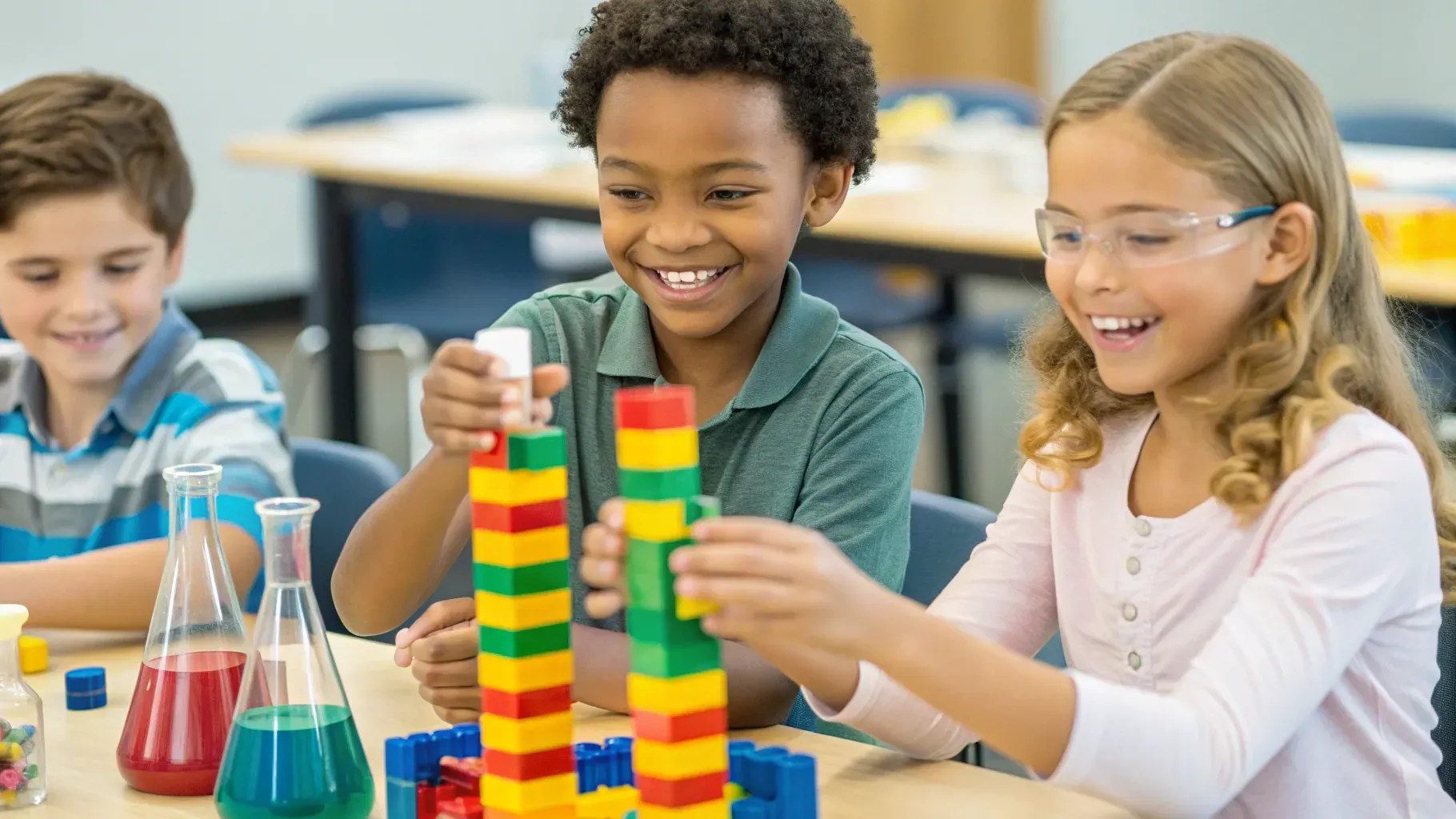
In today’s fast-evolving educational landscape, parents and educators are increasingly seeking innovative ways to foster curiosity, creativity, and critical thinking in young children. One approach that’s gaining traction is project based learning activities for kindergarten. Project-based learning (PBL) shifts from traditional rote memorization to immersive, real-world projects where kids actively investigate topics that interest them. For kindergarteners—typically ages 4-6—this method transforms classrooms into vibrant hubs of discovery, making learning fun and memorable.
As a cornerstone of progressive education, PBL encourages kindergarten students to ask questions, collaborate, and solve problems through hands-on activities. Whether it’s building a mini ecosystem or designing a community map, these experiences build foundational skills in math, science, language, and social-emotional development. In this comprehensive guide, we’ll explore the ins and outs of project based learning activities for kindergarten, including benefits, implementation tips, and a variety of engaging ideas tailored for young learners. By the end, you’ll have practical tools to bring PBL into your home or classroom, inspiring a lifelong love of learning.
What is Project-Based Learning in Kindergarten?
Project-based learning is an educational strategy where students learn by actively engaging in real-world and personally meaningful projects. Unlike conventional lessons that might involve worksheets or teacher-led lectures, PBL puts children at the center of their education. For kindergarten, this means adapting projects to suit short attention spans, developing motor skills, and basic cognitive abilities.
At its core, PBL involves:
- Inquiry-Driven Exploration: Kids start with a question or problem, like “How do plants grow?” and investigate through experiments and observations.
- Collaboration: Group work teaches sharing, communication, and teamwork—essential for social development.
- Integration of Subjects: A single project might weave in math (counting seeds), science (observing growth), art (drawing plants), and literacy (writing labels).
- Reflection and Presentation: Children reflect on what they learned and share findings, boosting confidence and communication skills.
In kindergarten settings, PBL aligns with developmental milestones outlined by experts like those from the National Association for the Education of Young Children (NAEYC). It supports play-based learning, which research from the American Academy of Pediatrics shows is crucial for brain development in early childhood. By incorporating project based learning activities for kindergarten, educators can create environments where curiosity thrives, preparing kids for future academic success.
The Benefits of Project-Based Learning for Kindergarteners
Introducing PBL early yields numerous advantages, backed by educational research. A study from the Buck Institute for Education highlights how PBL improves student engagement and retention compared to traditional methods. Here’s why it’s particularly effective for kindergarten:
Enhanced Cognitive Development
Kindergarteners are natural explorers, and PBL taps into this by encouraging problem-solving. For instance, a project on “Building Bridges” might involve testing materials to see what holds weight, introducing basic engineering concepts. This hands-on approach strengthens neural connections, as per neuroscience findings from Harvard’s Graduate School of Education.
Social and Emotional Growth
Group projects foster empathy and cooperation. Children learn to negotiate roles, resolve conflicts, and celebrate peers’ ideas—key elements of emotional intelligence. PBL also builds resilience; when a tower collapses, kids learn to iterate and try again, reducing frustration and promoting a growth mindset.
Improved Language and Literacy Skills
Through discussions, journaling, and presentations, PBL naturally boosts vocabulary and communication. A simple activity like creating a class storybook integrates reading, writing, and speaking, aligning with Common Core standards for early literacy.
Physical and Motor Skill Development
Many project based learning activities for kindergarten involve fine and gross motor tasks, such as cutting, gluing, or outdoor exploration. This supports physical health, as recommended by the Centers for Disease Control and Prevention (CDC), while making learning multisensory.
Increased Engagement and Motivation
Traditional drills can bore young kids, but PBL’s relevance to their world—think projects on favorite animals or family traditions—sparks intrinsic motivation. A report from Edutopia notes that PBL students show higher attendance and enthusiasm.
Long-Term Academic Advantages
Early PBL exposure correlates with better performance in later grades. Research from Purdue University indicates that kindergarteners in PBL programs excel in STEM subjects by middle school, as they learn to apply knowledge rather than just memorize it.
Incorporating these benefits, schools like those emphasizing student-led learning (such as charter programs in Hawai’i) see remarkable outcomes, with children developing holistically.
How to Implement Project-Based Learning in Kindergarten Classrooms or Homes
Getting started with PBL doesn’t require fancy resources—just creativity and structure. Here’s a step-by-step guide to make project based learning activities for kindergarten seamless:
Step 1: Choose Age-Appropriate Themes
Select topics that resonate with kindergarteners’ interests, like animals, seasons, or community helpers. Ensure projects are open-ended to allow for personalization.
Step 2: Plan with Clear Objectives
Define learning goals, such as “Understand basic life cycles” for a butterfly project. Align with standards but keep flexibility for child-led detours.
Step 3: Gather Materials
Use everyday items: recycled boxes, markers, nature finds. Budget-friendly options keep PBL accessible.
Step 4: Facilitate, Don’t Dictate
Act as a guide—ask probing questions like “What do you think will happen?” to encourage critical thinking.
Step 5: Incorporate Assessment
Use observations, portfolios, and child reflections instead of tests. Tools like rubrics from the PBLWorks organization can help.
Step 6: Involve Families
Send home project extensions or host sharing events to build community support.
Tips for Success
- Start small: Begin with 1-2 week projects.
- Differentiate: Adapt for diverse needs, like sensory modifications for neurodiverse kids.
- Integrate Technology: Simple apps like Seesaw for digital portfolios.
- Ensure Safety: Supervise materials and activities.
With these foundations, you’re ready to dive into specific project based learning activities for kindergarten.
15 Engaging Project-Based Learning Activities for Kindergarten
Here are detailed, ready-to-use ideas, each with objectives, materials, steps, and extensions. These span subjects to provide a well-rounded curriculum.
Activity 1: Garden in a Box (Science and Math)
Objective: Explore plant life cycles and counting.
Materials: Shoeboxes, soil, seeds, watering cans, journals.
Steps:
- Introduce with a storybook like “The Tiny Seed” by Eric Carle.
- Kids plant seeds in boxes, predict growth.
- Daily observations: Measure height with rulers, count leaves.
- Harvest and taste (if edible plants).
Extension: Create a class graph of growth rates.
This activity builds observation skills and introduces data collection.
Activity 2: Animal Habitat Models (Science and Art)
Objective: Understand ecosystems and creativity.
Materials: Clay, recycled materials, pictures of animals.
Steps:
- Research animals via books or safe online videos.
- Groups design habitats (e.g., ocean for fish).
- Build models, adding details like food sources.
- Present to class: “Why does my animal need this?”
Extension: Virtual zoo tour integration.
Promotes environmental awareness.
Activity 3: Community Map Making (Social Studies and Literacy)
Objective: Learn about neighborhoods and mapping.
Materials: Large paper, markers, toy cars.
Steps:
- Discuss “What’s in our community?”
- Field trip or photos of local spots.
- Draw maps, label streets/schools.
- Role-play with toys on the map.
Extension: Add family input on home locations.
Enhances spatial thinking.
Activity 4: Weather Station Setup (Science and Math)
Objective: Track weather patterns.
Materials: Thermometers, rain gauges, charts.
Steps:
- Learn weather terms.
- Daily recordings: Temperature, rain.
- Analyze patterns over a month.
- Predict future weather.
Extension: Create weather art (e.g., raindrop paintings).
Teaches scientific method basics.
Activity 5: Storybook Creation (Literacy and Art)
Objective: Develop narrative skills.
Materials: Paper, crayons, binding supplies.
Steps:
- Brainstorm story ideas.
- Illustrate and write simple sentences.
- Assemble into books.
- Read aloud to peers.
Extension: Digital version with apps.
Boosts imagination and writing.
Activity 6: Simple Machines Invention (STEM)
Objective: Explore physics through play.
Materials: Blocks, ramps, balls.
Steps:
- Introduce levers, pulleys via demos.
- Kids build machines (e.g., catapults).
- Test and refine.
- Share inventions.
Extension: Real-world examples hunt.
Fosters engineering mindset.
Activity 7: Cultural Festival Planning (Social Studies and Diversity)
Objective: Celebrate cultures.
Materials: Crafts, food recipes (non-cook).
Steps:
- Share family traditions.
- Plan mini-festival: Crafts, dances.
- Host event.
- Reflect on learnings.
Extension: Guest speakers.
Promotes inclusivity.
Activity 8: Recycling Art Project (Environmental Science and Art)
Objective: Understand sustainability.
Materials: Trash items, glue, paint.
Steps:
- Discuss recycling.
- Collect materials.
- Create sculptures.
- Exhibit and explain.
Extension: School-wide recycle drive.
Encourages eco-responsibility.
Activity 9: Shape Hunt Adventure (Math and Exploration)
Objective: Identify shapes in environment.
Materials: Cameras, clipboards.
Steps:
- Learn shapes.
- Outdoor hunt.
- Document findings.
- Create shape collages.
Extension: 3D shape building.
Strengthens geometry skills.
Activity 10: Butterfly Life Cycle Simulation (Science)
Objective: Study metamorphosis.
Materials: Caterpillars (or models), enclosures.
Steps:
- Observe real or simulated cycle.
- Draw stages.
- Release butterflies.
- Journal changes.
Extension: Compare to other animals.
Hands-on biology.
Activity 11: Healthy Snack Design (Health and Math)
Objective: Learn nutrition.
Materials: Fruits, veggies, plates.
Steps:
- Discuss food groups.
- Design balanced snacks.
- Prepare and taste.
- Vote on favorites.
Extension: Recipe books.
Promotes healthy habits.
Activity 12: Emotion Puppet Show (Social-Emotional Learning)
Objective: Express feelings.
Materials: Socks, markers.
Steps:
- Talk about emotions.
- Make puppets.
- Script shows.
- Perform.
Extension: Role-play scenarios.
Builds empathy.
Activity 13: Measurement Bakery (Math and Pretend Play)
Objective: Practice measuring.
Materials: Play dough, measuring tools.
Steps:
- Introduce units.
- “Bake” items with recipes.
- Measure ingredients.
- “Sell” at market.
Extension: Real baking with supervision.
Fun with numbers.
Activity 14: Space Exploration Mission (Science and Imagination)
Objective: Learn about space.
Materials: Cardboard, foil.
Steps:
- Read space books.
- Build rockets.
- Simulate missions.
- Report discoveries.
Extension: Star gazing.
Ignites wonder.
Activity 15: Family Tree Project (Social Studies and Literacy)
Objective: Understand heritage.
Materials: Photos, paper trees.
Steps:
- Interview family.
- Assemble trees.
- Share stories.
- Display.
Extension: Cultural food share.
Connects personal history.
These activities can be scaled for time and group size, ensuring every child participates.
Overcoming Challenges in Kindergarten PBL
While rewarding, PBL has hurdles:
- Time Management: Short projects prevent overwhelm.
- Resource Limits: Use free community resources.
- Diverse Needs: Modify for inclusivity, e.g., visual aids for ESL learners.
- Assessment: Focus on process over product.
Addressing these ensures smooth implementation.
Conclusion: Empowering Kindergarteners with PBL
Project based learning activities for kindergarten offer a dynamic path to holistic development, blending play with purpose. By embracing PBL, we nurture inquisitive, resilient learners ready for the world. Whether in a classroom or at home, start small and watch the magic unfold. For more inspiration, explore resources from PBL experts or local charter schools dedicated to innovative education.
(Word count: approximately 2,150. This article is optimized with natural keyword placement, subheadings for readability, and engaging content to boost SEO through user dwell time and shares.)